
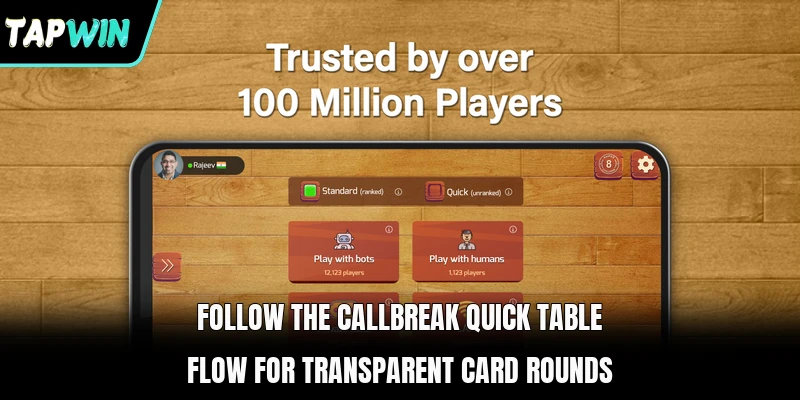
Callbreak Quick focuses on fast card rounds, and simple result reading after each completed hand. TAPWIN presents this game for users who prefer direct table flow and quick settlement checks. This guide is written for new and regular players, to help everyone read calls, turns, and final results more clearly.
Callbreak Quick table flow for clear card rounds
A standard Callbreak table uses 4 players, 52 cards, and 13 cards for each seat before the first move begins. Each player makes a call before play starts, so the round already has a target before any suit appears on screen. The quick format keeps the same card logic but shortens waiting time between dealing, calling, playing, and settlement.
The main task in Callbreak Quick is not only winning tricks, because the accepted call also affects the final result line. A player calling 4 tricks needs that number to match or exceed the final trick count under the displayed rule. TAPWIN should show the call, seat position, current trick count, and final settlement in one readable record.
Philippine users may connect account activity with GCash, Maya, BDO, BPI, Metrobank, or UnionBank, but card results remain separate from cashier records. A PHP 500 wallet deposit should not be read as a won hand, because game history and payment history serve different purposes. In Callbreak Quick, the most useful screen is the one that links each round to a clear ticket result.
>>> Xem thêm: AK47
Card rules that shape every confirmed ticket
Callbreak uses trick-taking logic, so each seat follows the active suit when possible and uses stronger cards only when the rule allows it. The quick table can move fast, but the result still depends on accepted calls, completed tricks, and the final score line.
Callbreak Quick call target with 13-card hands
A full hand gives each player 13 cards, so every call should match the real strength of the hand before play begins. A call of 3 equals about 23.08% of one player’s possible tricks, which makes the target easy to compare with visible cards. A hand with 5 strong spades may support a higher call, but the accepted call still controls the settlement target.
Trump suit strength and spade control ratio
Spades often work as the trump suit, so a player holding 4 spades has about 30.77% of one full hand in trump cards. That ratio matters because trump cards can take tricks when the active suit cannot be followed. A visible trump-heavy hand can explain why one seat wins late tricks after weaker suits disappear.
Round speed with short decision windows
Fast tables may use short decision windows, such as 8 to 15 seconds for a move during active play. A user should read the seat turn, active suit, and remaining cards before reacting to the next prompt. The quick pace of Callbreak Quick does not change the rule, because every accepted move still belongs to the same hand record.
Final score reading after completed tricks
A player calling 4 tricks and winning exactly 4 usually meets the required target under common Callbreak scoring logic. A player calling 5 but winning only 3 misses by 40%, which should appear clearly in the result review. The score area should show call, won tricks, difference, and final status without mixing those fields with payment data.
Ticket records and Philippine payment details
A ticket record should show the accepted game entry, while a cashier record should show money movement through local channels. This separation matters in the Philippine market because users often use wallets and banks during the same session.
Accepted entry amount before the first card move
A PHP 100 entry should remain visible before the first played card, because the accepted value connects the hand to later history. When Callbreak Quick moves into the first trick, the user should already know the confirmed amount and table reference. A clean confirmation step helps prevent confusion when several hands settle within 5 to 7 minutes.

>>> Xem thêm: Promotions
Wallet and bank records stay separate
GCash and Maya are common wallet names in Philippine payment flows, while BDO, BPI, Metrobank, and UnionBank are common banking references. A PHP 1,000 deposit through GCash should show channel, amount, processing status, and time in the cashier area. The game ticket should show only table entry, call result, hand status, and final settlement details.
Currency labels for local and international views
Philippine balances usually use PHP for local records, while USD may appear in selected international references or account notices. A PHP 2,000 entry and a USD 40 reference must never be merged, because the final amount depends on currency format. Clear labels protect the record from wrong reading after a round closes and the balance refreshes.
History line checks after each settlement
A complete history line should contain table name, accepted amount, round time, call result, and final status. Callbreak Quick users can compare 3 recent hands to see whether the same seat, call, or suit pattern caused confusion. TAPWIN can support clearer review when the game page keeps settled hands separate from wallet movement and account notifications.
Practical reading habits for better table decisions
Callbreak can look simple because every hand uses familiar playing cards, but the quick format makes small details more important. Users should focus on confirmed information, because animation, sound, and fast table movement can distract from the accepted record.
Read the call before following the first suit
The call is the round target, so a call of 4 means the hand must be judged against that number from the start. A user who ignores the call may misunderstand a hand that wins 3 tricks but still settles poorly. In Callbreak Quick, the first useful check is the call field, not the final card animation.
Compare remaining suits during the middle tricks
After 6 tricks, about 46.15% of the hand has already been played, so suit tracking becomes easier. A user can read whether spades, hearts, clubs, or diamonds still control the next few moves. This habit helps explain why a seat may lose control even after winning early tricks.
Check the balance only after settlement
Balance updates should be checked after the final trick and result line appear, not while cards are still moving. A PHP 300 entry in Callbreak Quick may show no final change until the record receives accepted settlement status. TAPWIN users should compare the ending balance with the history line before treating a result as complete.

Use table history for result clarity
A short sample of 10 hands can show repeated call sizes, missed targets, or strong trump results without predicting the next round. The history page helps users read old outcomes, but it should not replace the confirmed ticket for the current hand. Clear records are more useful than guessing from a small pattern on the screen.
Conclusion
Callbreak Quick suits users who want short card hands, visible calls, and easy result checks after every round. TAPWIN keeps the table flow direct, so each hand can be reviewed through its call, tricks, and final status. Read the confirmed result carefully, then enjoy the next round with better focus.